Hyundai Genesis (DH): Automatic Transmission System / Automatic Transmission Repair procedures
Hyundai Genesis (DH) 2013-2016 Service Manual / Automatic Transmission System (SBC) / Automatic Transmission System / Automatic Transmission Repair procedures
| Removal |
| 1. |
Turn ignition switch OFF and disconnect the negative (-) battery cable. |
| 2. |
Remove the under cover.
(Refer to Engine Mechanical System - "Engine room under cover") |
| 3. |
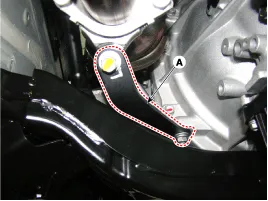
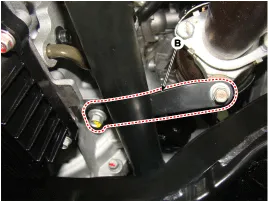
Remove the LH side stay (A) and RH side stay (B).
|
| 4. |
Remove the engine and transmission assembly.
(Refer to Engine Mechanical System - "Engine And Transaxle Assembly") |
| 5. |
For AWD, remove the front propeller shaft assembly.
(Refer to Driveshaft and axle - "Front Axle Assembly") |
| 6. |
Using the elephant jack, support the engine. |
| 7. |
Remove the starter cover (A). |
| 8. |
Remove the engine support bracket (B).
|

| 9. |
Disconnect starter connector (A) and cable (B) from the start "B" terminal.
|

| 10. |
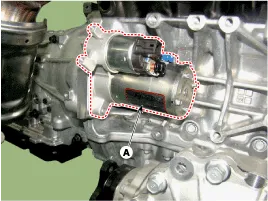
Remove the starter (A).
|
| 11. |
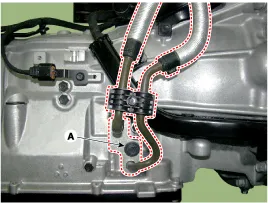
Disconnect the oil cooler tube (A).
|