
Hyundai Genesis (DH): Air Conditioning System / Compressor Description and Operation
| Description |
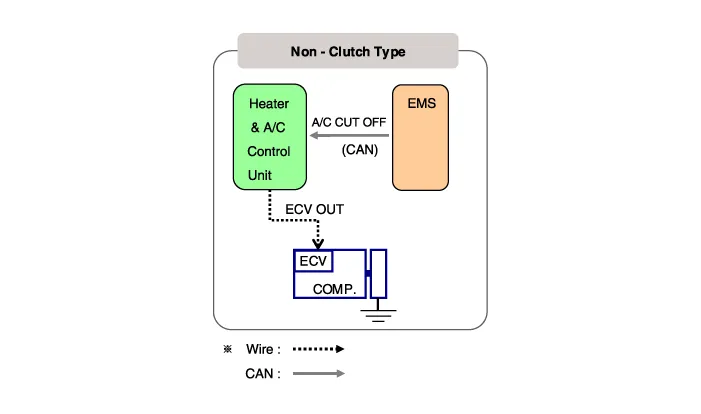
Replacement 1. Discharge refrigerant from refrigeration system. 2. Replace any faulty tubes or hoses. Cap the open fittings immediately to keep moisture or dirt out of the system.
Components [Lambda Engine] 1. Center Bolt2. Hub Bolt3. Limiter & Damper Assembly4. Snap Ring5. Pulley6. Compressor Assembly [Tau Engine] 1.
Other information:
Hyundai Genesis (DH) 2013-2016 Service Manual: Description and Operation
Description BSD is a system that measures the speed of and distance from the following vehicles by using two magnetic wave radar sensors attached to the rear bumper, and detects any vehicle within the blind spot zone and gives off alarm (visual and auditory).
Hyundai Genesis (DH) 2013-2016 Service Manual: Blind Spot Detection Switch Repair procedures
Removal 1. Disconnect the negative (-) battery terminal. 2. Remove the crash pad lower panel. (Refer to Body - "Crash Pad") 3. Remove the blind spot detection (BSD) switch (A) after disengaging the mounting clip. Installation 1. Install the crash pad side switch assembly after connecting the connector.
Categories
- Manuals Home
- Hyundai Genesis Owners Manual
- Hyundai Genesis Service Manual
- Engine Electrical System
- General Information
- Brake System
- New on site
- Most important about car
