
Hyundai Genesis (DH): Seat Belt Pretensioner / Pre-activeSeat Belt (PSB) Repair procedures
| Removal |
| 1. |
Disconnect the battery negative cable, and wait for at least three minutes before beginning work. |
| 2. |
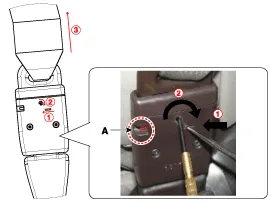
Remove the front anchor seat belt (A).
|
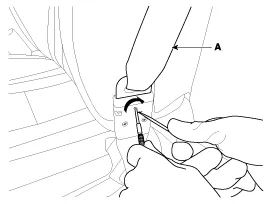


 ) and turn it clockwise.
 ).
).
| 3. |
Remove the center pillar lower trim.
(Refer to Body - "Center Pillar Trim") |
| 4. |
Remove the center pillar upper trim.
(Refer to Body - "Center Pillar Trim") |
| 5. |
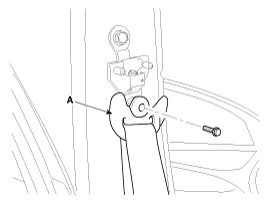
After loosening the mounting bolt, then remove the front seat belt lower anchor (A).
|
| 6. |
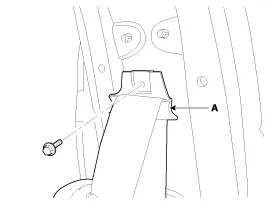
Loosen the front seat belt webbing guide (A) mounting bolts.
|
| 7. |
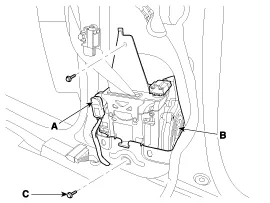
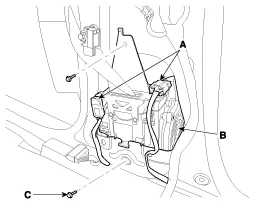
After disconnecting the pretensioner connector lock pin,
remove the front seat belt pretensioner connectors (A), loosen the
mounting bolts, then remove the front seat belt pretensioner (B).
[Genral Type]
[PSB Option Type]
|
| Installation |
| 1. |
Turn the ignition switch OFF. |
| 2. |
Disconnect the battery negative cable and wait for at least three minutes. |
| 3. |
Install in the reverse order of removal. |
| 4. |
Reconnect the battery negative cable. |
| 5. |
After installing the seat belt pretensioner, confirm proper system operation:
Turn the ignition switch ON; the SRS indicator light should turn on for about six seconds and then go off. |
Components 1. Pre-active Seat Belt (PSB)2. Center Pillar 1. Pre-active Seat Belt Unit (PSB)
Description Pre-active Seat Belt (PSB) guarantees initial restraint performance by winding the seat belt right before a crash or dangerous condition and enhances the effects of the seat belt pretensioner, load limiter and airbags.
Other information:
Hyundai Genesis (DH) 2013-2016 Service Manual: Auto Defogging Sensor Description and Operation
Description The auto defogging sensor is installed on the front window glass. The sensor judges and sends signal if moisture occurs to blow out wind for defogging. The air conditioner control module receives signal from the sensor and restrains moisture and eliminate defog by controlling the intake actuator, A/C, auto defogging actuator,
Hyundai Genesis (DH) 2013-2016 Service Manual: Intake Actuator Repair procedures
Inspection 1. Turn the ignition switch OFF. 2. Disconnect the intake actuator connector. 3. Verify that the intake actuator operates to the fresh position when connecting 12V to terminal 3 and grounding terminal 4. Verify that the intake actuator operates to the recirculation position when connected in reverse.
Categories
- Manuals Home
- Hyundai Genesis Owners Manual
- Hyundai Genesis Service Manual
- Starter Repair procedures
- Emission Control System
- Parking Assist Sensor Repair procedures
- New on site
- Most important about car
