
Hyundai Genesis (DH): Ignition System / Spark Plug Repair procedures
Hyundai Genesis (DH) 2013-2016 Service Manual / Engine Electrical System / Ignition System / Spark Plug Repair procedures
| Inspection |
| [On vehicle inspection] |
| 1. |
Accelerate the engine to about 3,000 rpm for 3 minutes or longer. |
| 2. |
Remove the spark plug. |
| 3. |
Check the spark plug visually.
If the electrode is dry, the spark plug is normal.
If the electrode is wet, check the damage and electrode gap as below. |
| [Component Inspection] |
| 1. |
Check the spark plug for any damage on its thread and insulator.
If there is damage, replace the spark plug. |
| 2. |
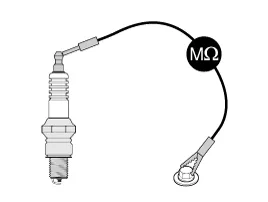
Check the electrode. Measure the insulation resistance with an ohmmeter.
If the resistance is less than the specified value, adjust the electrode gap.
|
| 3. |
Check the spark plug electrode gap.
If the gap is greater than the maximum, replace the spark plug.
|

