
Hyundai Genesis (DH): Air Conditioning System / Components and Components Location
Hyundai Genesis (DH) 2013-2016 Service Manual / Heating, Ventilation and Air Conditioning / Air Conditioning System / Components and Components Location
| Component Location Index |
Engine Room
| [Lambda Engine] |
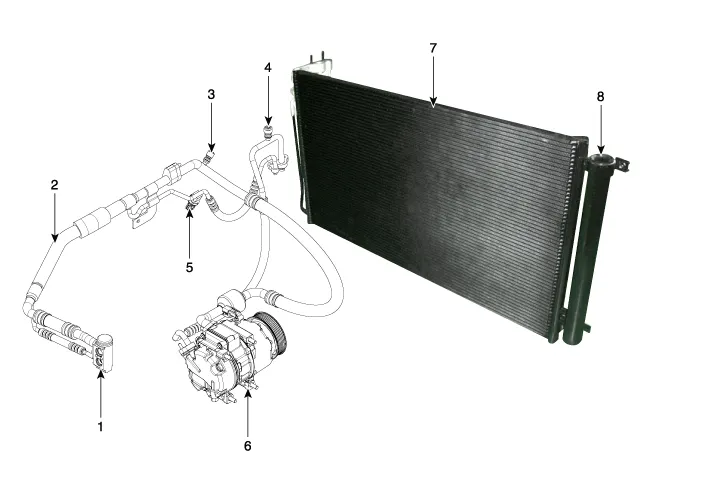
| 1. Expansion Valve 2. Suction & Liquid Tube Assembly 3. Service Port (Low Pressure) 4. Service Port (High Pressure) | 5. A/C Pressure Transducer (APT) 6. Compressor 7. Condenser 8. Receiver-drier |
| [Tau Engine] |
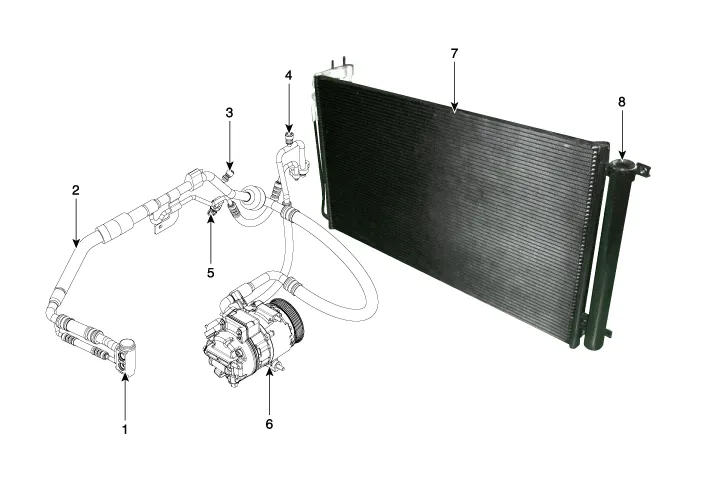
| 1. Expansion Valve 2. Suction & Liquid Tube Assembly 3. Service Port (Low Pressure) 4. Service Port (High Pressure) | 5. A/C Pressure Transducer (APT) 6. Compressor 7. Condenser 8. Receiver-drier |
Interior
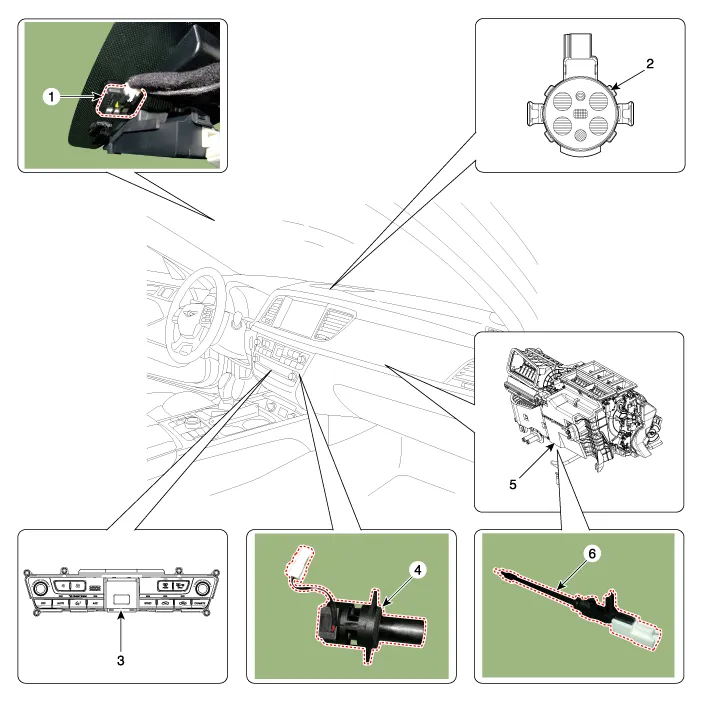
| 1. Auto Defogging Sensor 2. Photo Sensor 3. Heater & A/C Control Unit | 4. Interior Temperature Sensor 5. Heater & Blower Unit 6. Evaporator Temperature Sensor |
Refrigerant System Service Basics Refrigerant Recovery Use only service equipment that is U.L-listed and is certified to meet the requirements of SAE J2210 to remove HFC-134a(R-134a) from the air conditioning system.
Oil Specification 1. The HFC-134a system requires synthetic (PAG) compressor oil whereas the R-12 system requires mineral compressor oil. The two oils must never be mixed.
Other information:
Hyundai Genesis (DH) 2013-2016 Service Manual: LKAS Unit Repair procedures
Removal 1. Disconnect the negative (-) battery terminal. 2. Remove the mirror wiring cover (A) and rain sensor cover (B). 3. Remove the LKAS unit connector (A). 4. Remove the LKAS unit after disengaging the mounting bracket (A). Installation 1.
Hyundai Genesis (DH) 2013-2016 Service Manual: Head Up Display Unit Troubleshooting
T
Categories
- Manuals Home
- Hyundai Genesis Owners Manual
- Hyundai Genesis Service Manual
- Suspension System
- Description and Operation
- Description and Operation
- New on site
- Most important about car

Copyright В© 2026 www.hgenesisdh.com - 0.0332