
Hyundai Genesis (DH): Indicators And Gauges / Instrument Cluster Components and Components Location
Hyundai Genesis (DH) 2013-2016 Service Manual / Body Electrical System / Indicators And Gauges / Instrument Cluster Components and Components Location
| Components |
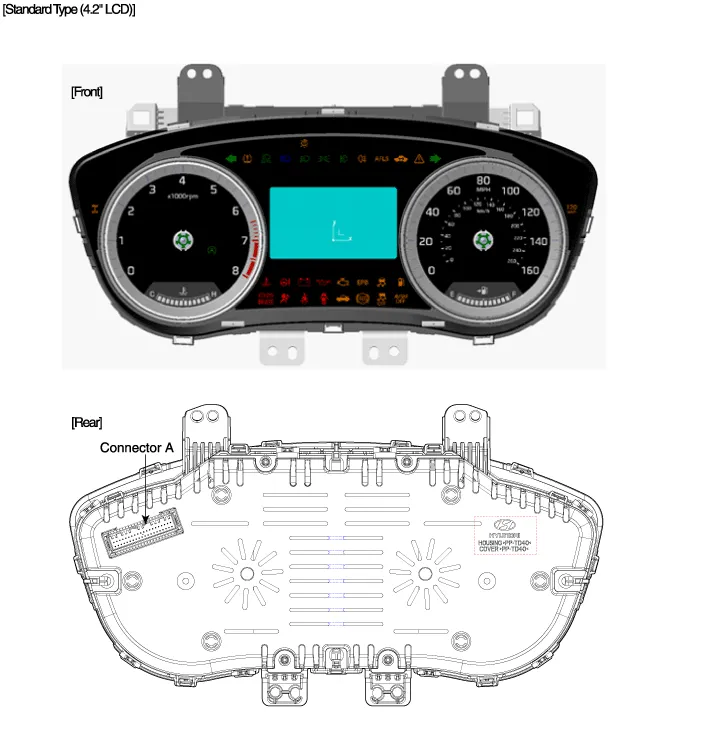
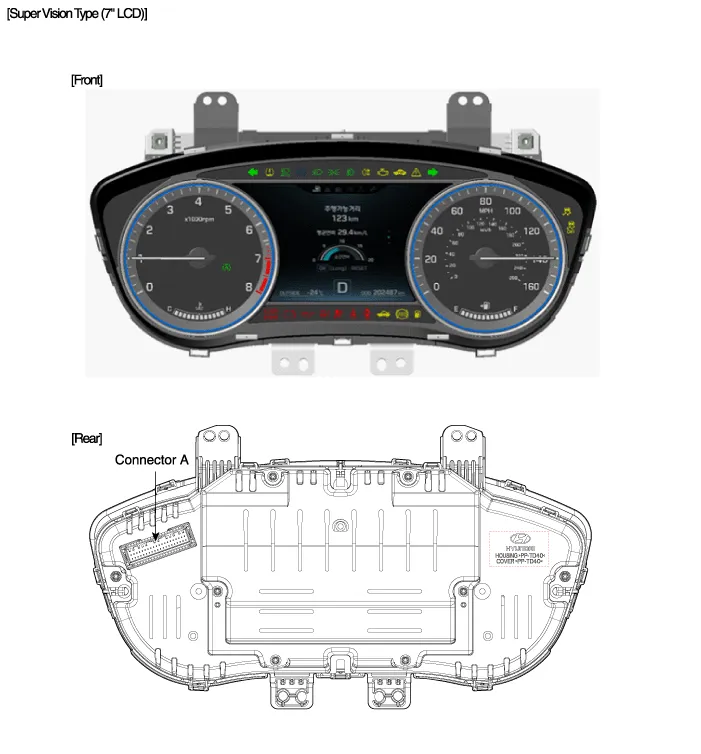
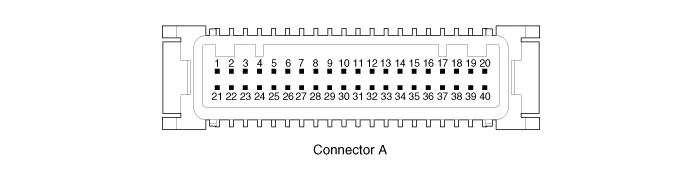
Connector Pin Information
| No. | Description | No. | Description |
| 1 | - | 21 | - |
| 2 | Illumination output | 22 | - |
| 3 | Rheostat down switch | 23 | 4P output |
| 4 | Rheostat up switch | 24 | Immobilizer |
| 5 | AT N output | 25 | AT S output |
| 6 | Oil pressure | 26 | AT R output |
| 7 | Low washer | 27 | AT P output |
| 8 | Charge | 28 | - |
| 9 | AT D output | 29 | - |
| 10 | Illumination + | 30 | MM_CAN High |
| 11 | - | 31 | MM_CAN Low |
| 12 | Active ECO | 32 | C_CAN High |
| 13 | Heated wheel indicator | 33 | C_CAN Low |
| 14 | Fuel | 34 | Trip switch1 |
| 15 | Detent output | 35 | Trip switch2 |
| 16 | Fuel ground | 36 | Trip switch ground |
| 17 | - | 37 | Signal ground |
| 18 | Speaker - | 38 | - |
| 19 | Speaker + | 39 | IGN + |
| 20 | Aig bag + | 40 | Battery + |
Circuit Diagram
Other information:
Hyundai Genesis (DH) 2013-2016 Service Manual: Components and Components Location
C
Hyundai Genesis (DH) 2013-2016 Service Manual: Receiver-Drier Repair procedures
Replacement 1. Remove the condenser. 2. Remove the cap (B) on the bottom of the condenser with the L wrench (A). Tightening torque : 9.81 ~ 14.71 N.m (1.0 ~ 1.5 kgf.m, 7.2 ~ 10.8 lb-ft) 3. Remove the receiver-drier (A) from condenser using a long nose plier.
Categories
- Manuals Home
- Hyundai Genesis Owners Manual
- Hyundai Genesis Service Manual
- Suspension System
- Starter Repair procedures
- 4 Wheel Drive (AWD) System
- New on site
- Most important about car

Copyright В© 2026 www.hgenesisdh.com - 0.0272