
Hyundai Genesis (DH): Fuses And Relays / Relay Box (Engine Compartment) Repair procedures
Hyundai Genesis (DH) 2013-2016 Service Manual / Body Electrical System / Fuses And Relays / Relay Box (Engine Compartment) Repair procedures
| Inspection |
| 1. |
Disconnect the negative (-) battery terminal. |
| 2. |
Pull out the relay from the engine compartment relay box. |
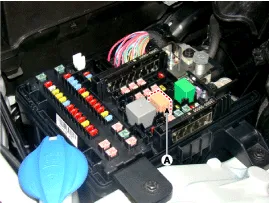
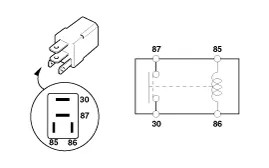
Power Relay (Type A)
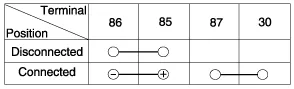
Check for continuity between the terminals.
A : start relay
| 1. |
After supplying power to between No. 85 and 86 power relay
terminals, check that there is continuity between No. 30 and 87
terminals. |
| 2. |
After disconnecting power between No. 85 and 86 power relay
terminals, check that there is no continuity between No. 30 and 87
terminals.
Engine Room Relay Box
Diesel Box
|

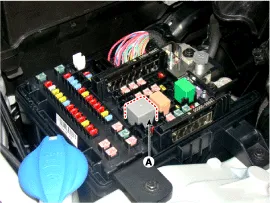
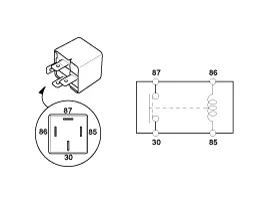
Power Relay (Type B)
Check for continuity between the terminals.
A : Cooling fan relay
| 1. |
After supplying power to between No. 85 and 86 power relay
terminals, check that there is continuity between No. 30 and 87
terminals. |
| 2. |
After disconnecting power between No. 85 and 86 power relay
terminals, check that there is no continuity between No. 30 and 87
terminals.
|
Metal Core PCB block
| 1. |
Disconnect the battery(-) terminals. |
| 2. |
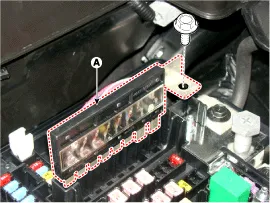
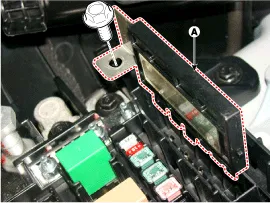
Push the four hooks in the direction of the arrow and lift up the metal core PCB block (A).
|

| 3. |
Remove the metal core PCB by disconnecting the connector. |
Fuse
| 1. |
Check that the fuse holders are loosely held and that the fuses are securely fixed by the holders. |
| 2. |
Check that each fuse circuit has the exact fuse capacity. |
| 3. |
Check the fuses for any damage.
|

Multi Fuse
Engine room fuse is to optimize the package.
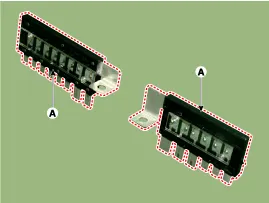
|

Component Location Engine room junction block Battery junction block
Component Location Interior Junction Block
Other information:
Hyundai Genesis (DH) 2013-2016 Service Manual: Description and Operation
D
Hyundai Genesis (DH) 2013-2016 Service Manual: Mode Control Actuator Repair procedures
Inspection 1. Turn the ignition switch OFF. 2. Disconnect the mode control actuator connector. 3. Verify that the mode control actuator operates to the defrost mode when connecting 12V to terminal 3 and grounding terminal 4. Verify that the mode control actuator operates to the vent mode when connected in reverse.
Categories
- Manuals Home
- Hyundai Genesis Owners Manual
- Hyundai Genesis Service Manual
- Description and Operation
- Evaporative Emission Control System
- Restraint
- New on site
- Most important about car

Copyright В© 2026 www.hgenesisdh.com - 0.0273