
Hyundai Genesis (DH): Fuel Delivery System / Fuel Tank Repair procedures
Hyundai Genesis (DH) 2013-2016 Service Manual / Engine Control / Fuel System / Fuel Delivery System / Fuel Tank Repair procedures
| Removal |
| 1. |
Release the residual pressure in fuel line.
(Refer to Fuel Delivery System - "Release Residual Pressure in Fuel Line") |
| 2. |
Turn the ignition switch OFF and disconnect the negative (-) battery cable. |
| 3. |
Fold the rear seat cushion. |
| 4. |
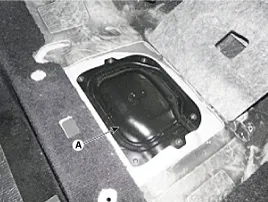
Remove the service cover (A) of the fuel pump after loosening the screws.
|
| 5. |
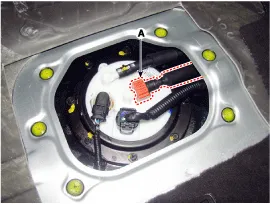
Disconnect the fuel feed tube quick - connector (A).
|
| 6. |
Lift the vehicle. |
| 7. |
Remove the rear-RH wheel, tire and inner wheel house. |
| 8. |
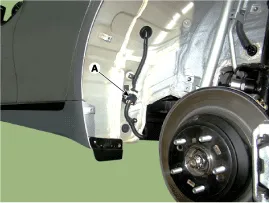
Disconnect the fuel tank extension connector (A), and then remove the wiring harness from the vehicle.
|
| 9. |
Remove the center muffler assembly.
(Refer to Engine Mechanical System - "Muffler") |
| 10. |
Remove the propeller shaft assembly.
(Refer to Driveshaft and Axle - "Propeller shaft Assembly") |
| 11. |
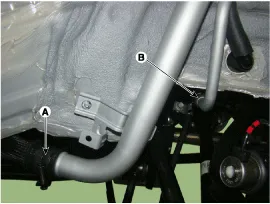
Disconnect the fuel filler hose (A) and leveling hose (B).
|
| 12. |
Support the fuel tank with jack (A).
|
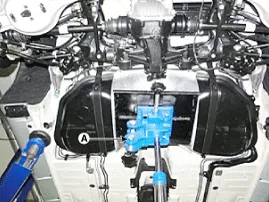
| 13. |
Remove the fuel tank installation nut (A) and then loosen the fuel tank (B).
|
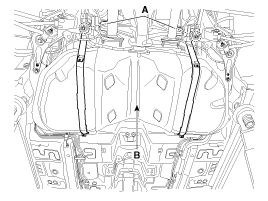
| 14. |
Disconnect the vent hose (A) and then remove the fuel tank.
|
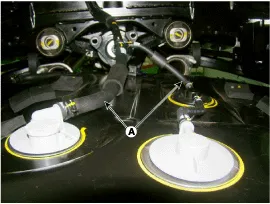
| Installation |
| 1. |
To install, reverse the removal procedure.
|
Fuel Pressure Test 1. Release the residual pressure in fuel line. (Refer to Fuel Delivery System - "Release Residual Pressure in Fuel Line") When removing the fuel pump relay, a Diagnostic Trouble Code (DTC) may turn up.
Removal 1. Release the residual pressure in fuel line. (Refer to Fuel Delivery System - "Release Residual Pressure in Fuel Line") 2. Fold the rear seat cushion.
Other information:
Hyundai Genesis (DH) 2013-2016 Service Manual: High Mounted Stop Lamp Repair procedures
Removal High Mounted Stop Lamp 1. Disconnect the negative (-) battery terminal. 2. Remove the roof trim assembly. (Refer to Body - "Roof Trim") 3. Remove the high mounted stop lamp assembly (A) after loosening the mounting screws. Installation 1.
Hyundai Genesis (DH) 2013-2016 Service Manual: Evaporator Temperature Sensor Repair procedures
I
Categories
- Manuals Home
- Hyundai Genesis Owners Manual
- Hyundai Genesis Service Manual
- Engine Mechanical System
- Description and Operation
- Components and Components Location
- New on site
- Most important about car

Copyright В© 2026 www.hgenesisdh.com - 0.0323