
Hyundai Genesis (DH): Seat Electrical / Seat heater switch Repair procedures
Hyundai Genesis (DH) 2013-2016 Service Manual / Body Electrical System / Seat Electrical / Seat heater switch Repair procedures
| Removal |
Front Seat
| 1. |
Disconnect the battery (-)terminals. |
| 2. |
Remove the floor console upper cover.
(Refer to Body - "Floor Console Assembly")
|
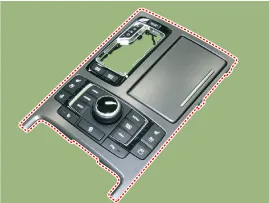
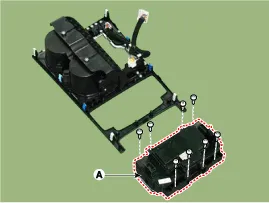
| 3. |
Disconnect the connecter and screw and remove the seat heater switch assembly (A).
|
Rear Seat Armrest Switch
| 1. |
Disconnect the negative (-) battery terminal. |
| 2. |
Remove the drink holder pad (A).
|
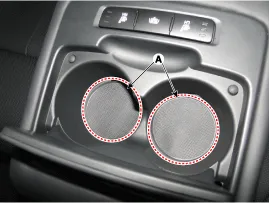
| 3. |
Loosen the mounting screws (A).
|
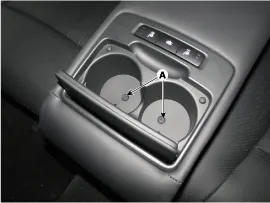
| 4. |
Using a screwdriver or remover, remove the rear seat armrest drink holder assembly (A).
|
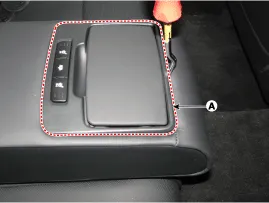
| 5. |
Disconnect the connector (B).
|
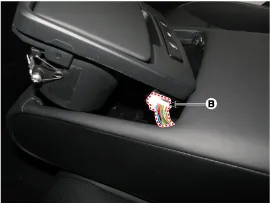
| 6. |
Remove the seat heat switch (A) after loosening the mounting screws.
|
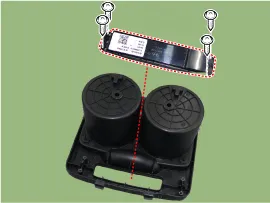
| Inspection |
| 1. |
Power seat switch sends/receives signals via CAN
communication so it is impossible to check the electric current of
switch components. |
| 2. |
Inspect the seat heater system using GDS.
Circuit Diagram Component Location 1. Heating ventilation blower2. Heating ventilation blower ECU3. Thermoelectric element [TED] Other information:Hyundai Genesis (DH) 2013-2016 Service Manual: Repair proceduresDiagnosis With GDS 1. BSD system defects can be quickly diagnosed with the GDS. GDS operates actuator quickly to monitor, input/output value and self diagnosis. 2. Connect the cable of GDS to the data link connector in driver side crash pad lower panel, and turn on the GDS. Hyundai Genesis (DH) 2013-2016 Service Manual: PGS Unit (Back & Blinde Unit) Repair proceduresRemoval 1. Disconnect the negative (-) battery terminal. 2. Remove the glove box housing (A). (Refer to Body - "Glove Box") 3. Remove the PGS unit (A) after loosening the nuts. Installation 1. Install the PGS unit. 2. Install the glove box housing. Categories

Copyright В© 2026 www.hgenesisdh.com - 0.0257
|
